

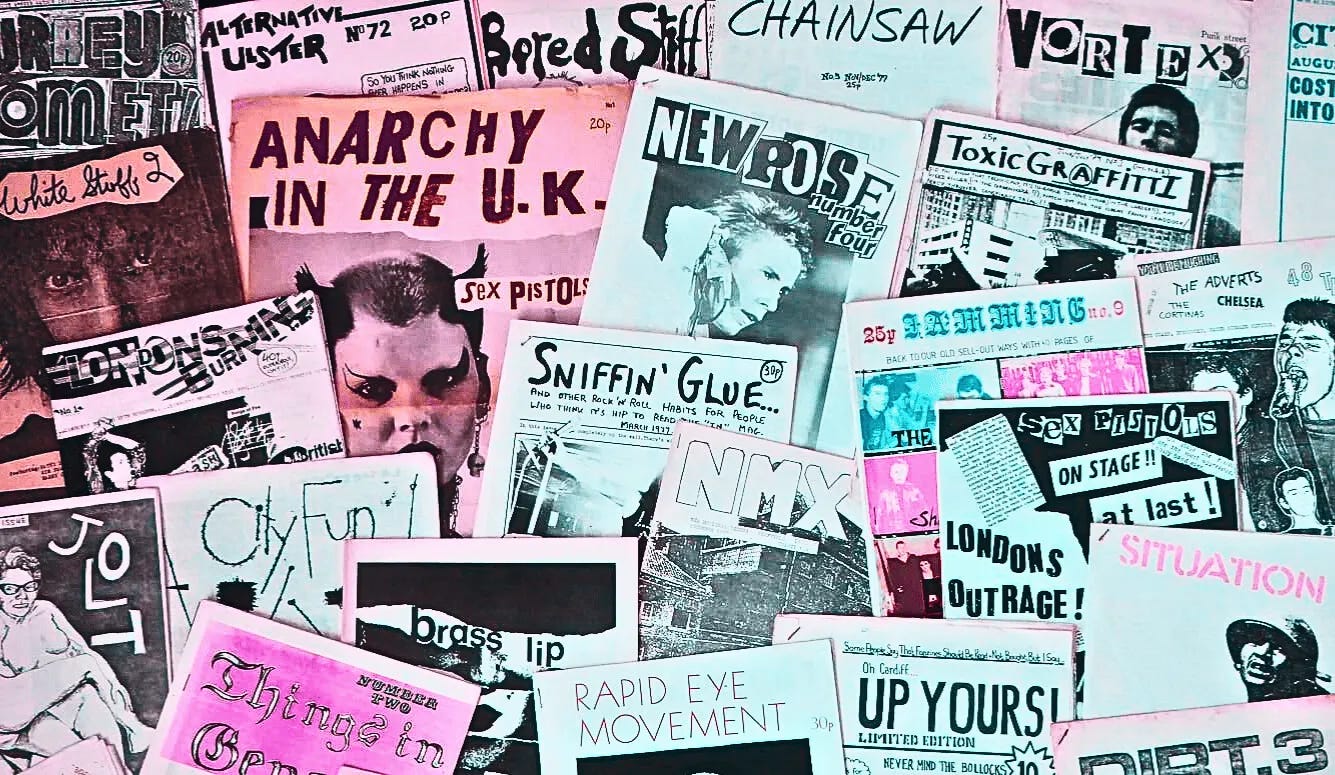
Hi all, I’ve written a lengthy piece on the rise and fall of the zine. I’m going to share a few excerpts here, please go to the consistently excellent Quillette (substack or website) and enjoy the whole thing!
On the potential of zines:
At the time, numerous social critics were warning about the breakdown of civic connection in Western societies. (Perhaps the most famous was Harvard political scientist Robert Putnam, whose widely cited 2000 book on the subject would be titled, Bowling Alone: The Collapse and Revival of American Community.) Popular culture, particularly TV and movies, came under fire for turning us into passive consumers who stared at screens instead of interacting with others.
I saw things differently. In We Want Some Too, I offered up zine subculture as a model for how deep connection to mass electronic culture was seeding new communities that were filling the void left by all those bygone bowling-league nights, Tupperware parties, and Elks Lodge meet-ups. While television and other forms of mass entertainment inspired a passive, top-down form of cultural participation, zines (and the digital equivalents that were just then beginning to flourish) inspired a more crowdsourced grass-roots approach, breaking down the rigid distinction between corporate producers and consumers.
On Zines in the Art Gallery:
In 2023, this whole too-precious trend coalesced into a travelling exhibition, Copy Machine Manifestos: Artists Who Make Zines, which showed around the world, including at the Vancouver Art Gallery and The Brooklyn Museum, where the concept was conceived. Naturally, it came complete with its own publication—an exit-through-the-giftshop hardcover book produced by London-based publisher Phaidon. The project adorns pretentious high-art flotsam with a superficial gloss of antique punk nerdom borrowed from zinedom—the conceit being that zines were primitive precursors groping toward the “boundary pushing” (yet also culturally sensitive) works of genius we are supposed to admire today.
On Zines in Academia:
Boston’s NPR affiliate recently exalted zines as “a way for marginalized communities to communicate with one another. For example, the Riot Grrrl feminist punk movement of the 1990s used zines to spread materials covering mental health, racism, sexual and domestic violence and reproductive rights. Zines today are similar in their mission.” For anyone who treasured zines in the pre-digital era, all of this sounds like a dispatch from la-la land. What we really loved about zines was the chance they offered us to revel in uncensored anarchy.