

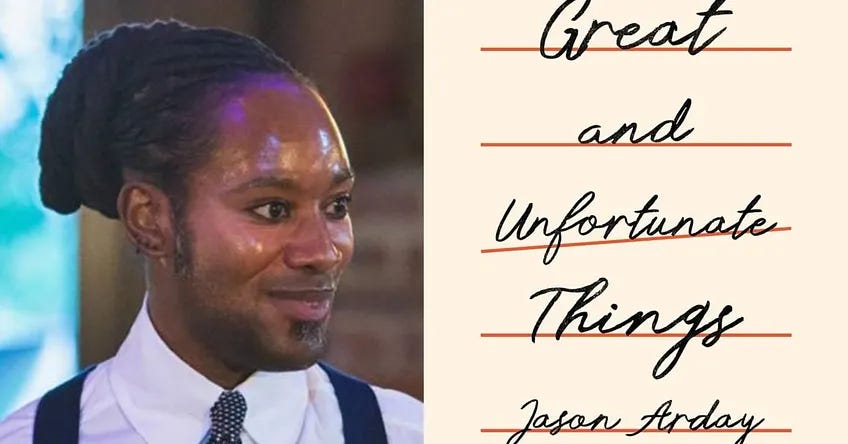
I’m haunted by the decision Jason Arday made to take his own life. I went through a mass media mobbing and came out the other end, just barely. The kind of sustained and dehumanizing swarming Arday went through does one thing, and one thing only: destroys.
Global, real time, always on—shocks incessantly delivered to every part of your body. It triggers a fight-or-flight response that does not abate. You find yourself in an endless spiral, a constant hypervigilant state where all you can do is think about what happened, what you should have done differently, how you couldn’t control the situation no matter what you might have done, around and around it goes.
In the meantime, you are in a very strange bubble of silence. Around you, everyone is normal, though keeping their distance. You can go out with the dog, take your kid to school, make dinner. You can go to the store and buy mouthwash, celery. Nobody says a word about it. Everything happens online, via social, via email, via text, never face to face. Total silence in the centre of the whirling vortex. Something is happening here, but you don’t know what it is. Something all about you. Not about you at all.
Let’s get this out of the way: Jason Arday is not a victim, but he is a human sacrifice twice over. Sacrificed to woke. Then sacrificed to the 24-hour world of refracted entertainments, outrage politics, perversion, sanctimony; the slow-moving Odyssey-like journey from the margin to the centre suddenly sped up, no escape wherever you go, wherever you are, some kind of ancient torture turned post-postmodern, the drip-drop of digital reverb driving you mad. It’s maddening. It’s madness.
A world, our world, made a man. Invented him, really. The man went along with it. I don’t know why, we will never know exactly why. But he went along with it. That, of course, was his fatal error. It’s an understandable one. He was handed accolades, titles, well paying positions and instant credibility. By all accounts, Arday, only 41 at the time of his death, was unwell. In exactly what way, I don’t know. He claimed autism and certainly was a serial fabulist of the most bizarre type, telling lies so big that nobody could but accept them—until they didn’t. His “scholarship” was a hodgepodge of self refrential wokery and plagirized wordplay.
Yet it’s unclear he actually knew that to be the case. I want to believe, at least, that he wasn’t just playing along, but somehow truly thought that he was doing the work, and doing it well. I don’t know. Either way, there he was, moving through academia like a hot knife through butter; Temple Grandin-on-the-Backs, Chauncey Gardiner-on-the-accursed-Potomac.
To speak, in defence or in outrage, is meaningless. In the whirlwind moment, there is only pile-on. Only more. It doesn’t matter what your perspective, whether you come as saviour or to deliver the final blow. Better to keep silent. It hurt me to witness yet another mobbing. I was fearful for Arday as a human being. He was in it. The typhoon. A bigger fiercer meaner The-Weather-Station-Sharknado-Super-Event than had descended on me. There are relatively few of us who know exactly what it is like.
You walk or in this case marathon through the forest, foolishly wondering at the way the leaves are behaving strangely, falling in this wrong season; dancing up around in weird spirals. And suddenly the whole woods is collapsing on top of you. I remember that first morning, waking up to find that the entire ridiculous Canadian arts and culture milleu aligning against me based on the flimsiest of premises. Taking the kid to school. We walked hand in hand down the quiet street. It was any other day. A sunny day in spring. But my face was burning and my heart was beating weirdly. I felt like I could see my breath. I saw my neighbor. She was across the street on her patio. She worked for The Toronto Star. She tracked me as I walked by. She already knew what I was in for.
It’s a bit like a dream now, a fairy tale. Once upon a time, I was attacked relentlessly online, featured repeatedly on the front pages of Canada’s biggest newspaper, subject to incidenary rhetoric, accused of being some kind of racist monster. My “story” even featured on the front of the page of the New York Times, above the fold, like a school shooting or a major political development. In an instant, your reputation is no longer your own. In an instant you are a character, a thing, a football to be kicked up and down the field as the winds of time mercurially blow and the audience cheers and rages and cries for blood and your head.
Ever since, when I see it happen to others, whether they are in the right or not, I am taken back to those days. Dark days. Some very dark days.
Arday was not in the right. He did many things wrong. Nevertheless, he did not deserve what he got. I had people around me. I had many many reasons to live. And I had done nothing wrong. It didn’t matter. Like Jason Arday, I was reduced to a figurehead, a symbol. Left and right ideaologues developed entire theories around me, parsed my words in columns aimed at burnishing their own reputations and distancing themselves from the stench of my rot. Like Jason Arday, my “case” reached a fever pitch because it seemed to be about so much more than whatever it was that I had been accused of. In the end, only a handful, a tiny few, cared what would or could happen to me. To this day, I still occasionally run into people from that former life of mine who are shocked and tonguetied to see me. They supposed I’d jumped or at least had the good sense to exile myself to the country for failed white racists or whatever it was I had supposedly become.
I could have. I could have taken Arday’s way out. I defintely thought about it. I was lucky that I had the support I needed. Arday didn’t. Many don’t. When people use you, when people want you solely as a symbol of some grander thing, they don’t support you when you no longer represent what they want. They discard you. Tear down the Arday statue. Scrub clean the digital record.
His death is a tragedy. It’s a tragedy for his family, friends, children. But it’s also a tragedy of the commons. How quick we are to dehumanize and destroy. He deserved to be exposed. But what was done to him, and only him, was not justice. It was not done out of virtue or truth-telling or reporting. The spectacle can never be redemptive, and Arday should never have been alone to try and find his way through the upside-down. Never. Not for a minute.
His death is convenient. Now he can be swept under the carpet, dust in the wind. Just as quickly as the hurricane blows up from the tempetuous seas does it disperse into someone else’s cooling, relieving breeze. Well, phew, I’m glad that’s over.
Wrong. I continue to want some modicum of justice for the way I was thrown away like garbage by my so-called peers and pals in culture (oh woke 1.0, that was so crazy). Jason Arday too deserves justice for the things that were done to him. Don’t hold your breath waiting. Don’t think about it at night when you are lying all alone in the world with your head on a pillow that feels like the first stone they threw at you.
Hal, this is an invaluable post. And so painful to read, with its searing, no-holds-barred prose, knowing what happened to you and how hard it was. So glad you did find the courage not to take a darker path, and so angry at the mob who tried to drag you there.
Hal, as hard as this is to read -- and it is -- I can't begin to imagine how difficult it was to live through, and write. I'm so sorry.